
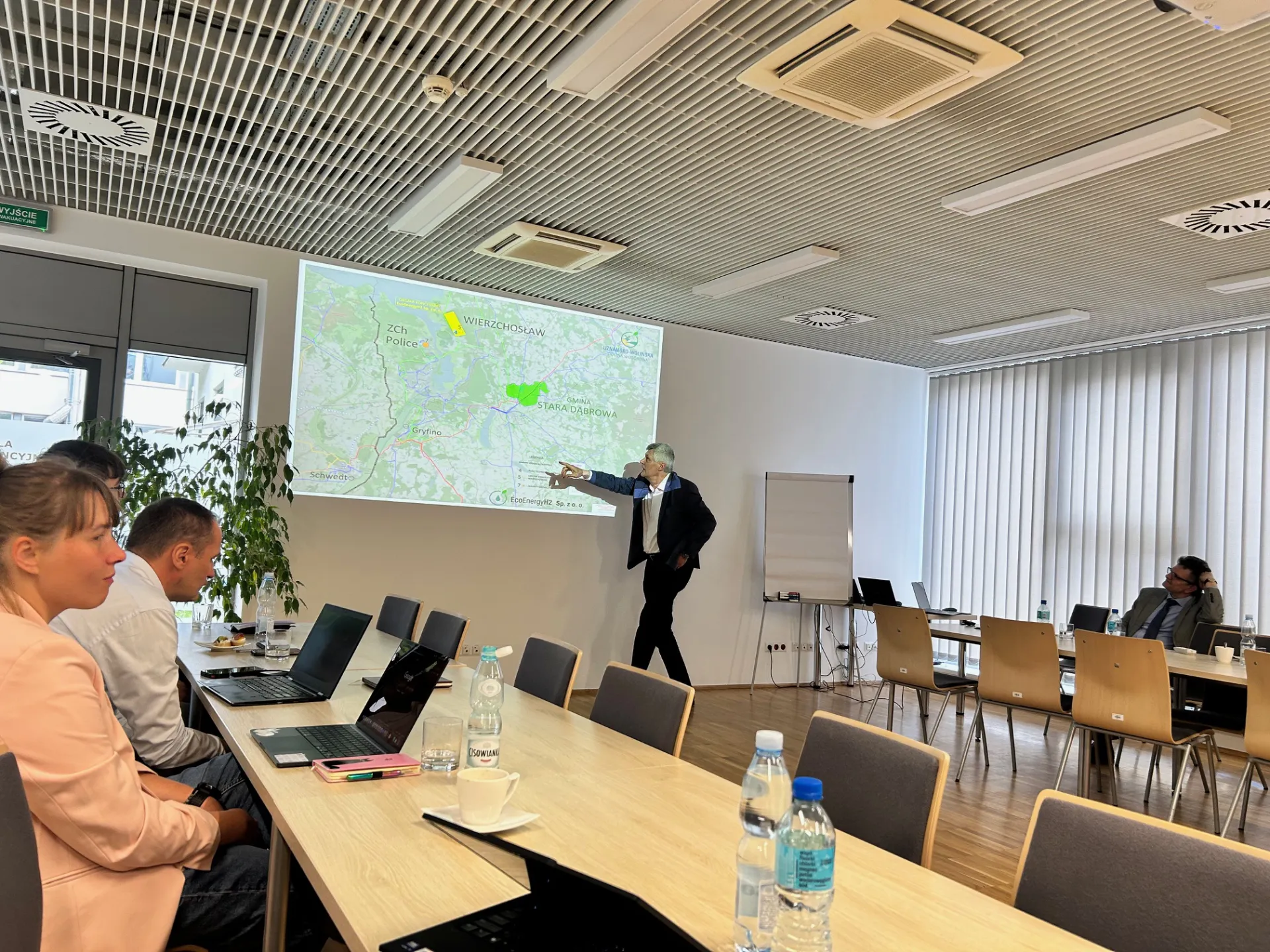
On the initiative of Prof. Jacek Leszczyński, on the day April 29, 2026. A seminar was held at the AGH University of Science and Technology in Krakow, at the Faculty of Energy and Fuels, Department of Thermal and Fluid-Flow Machinery, which is a continuation of previous activities with domestic companies in the area of hybrid and large-scale energy storage.
The aim of the seminar was to establish cooperation in joint research, infrastructure, and modernization projects in the areas of large-scale and hybrid energy storage technologies and energy efficiency of complex industrial processes. This was done in order to strengthen further cooperation and attempt to formulate further project proposals or other projects related to energy storage technologies, increased energy efficiency, process modernization, maintenance, and physical measurement. The seminar included presentations of projects and company research, as presentations highlighting research and implementation areas.
The team from the Faculty of Energy and Fuels, Department of Thermal and Fluid-Flow Machinery, AGH University of Science and Technology, presented several of their own achievements and programs with a time horizon for joint application. They also showed off their laboratory, where they demonstrated the operation of their own multi-piston expander (laboratory scale). Among the seminar participants were representatives of the following companies:
- ORLEN SA (Gas Technology Implementation Department),
- Polish Gas Company (PSG) Sp. z o. o.,
- KW Czatkowice Sp. z o. o.,
- DeweSoft Polska PSA.
- EcoEnergyH2 Sp. z o. o.
The guests were welcomed by the Dean of the Faculty of Energy and Fuels, Prof. Monika Motak.
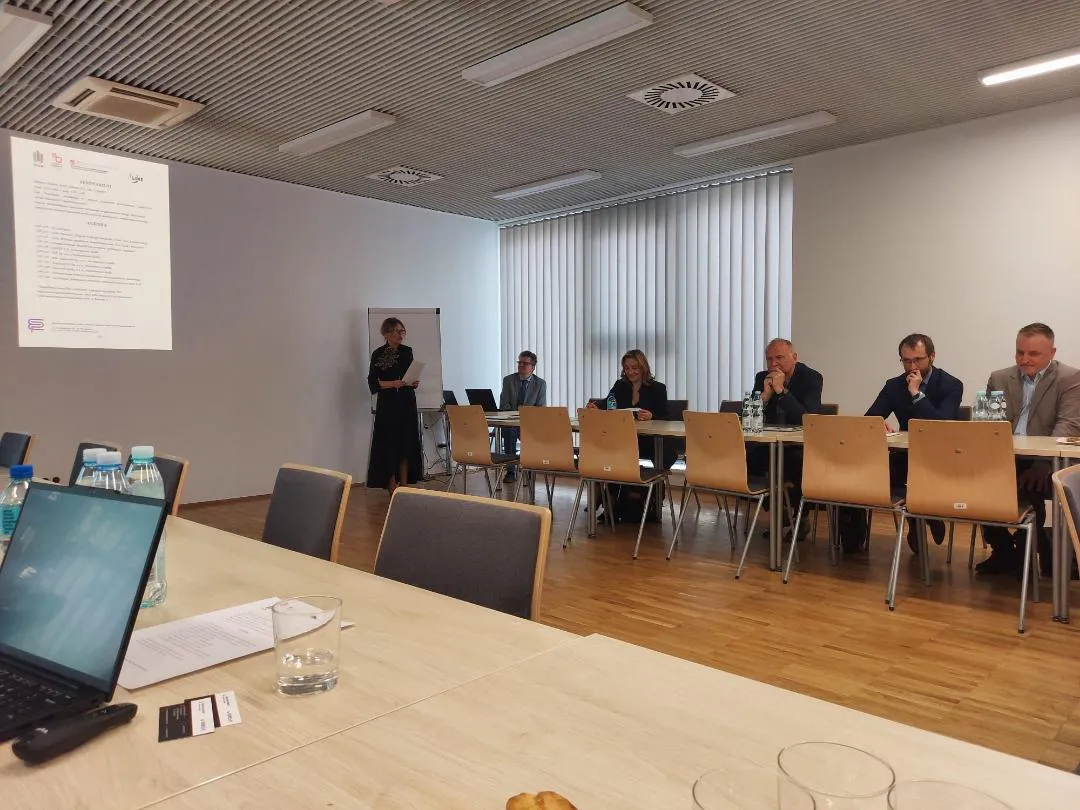
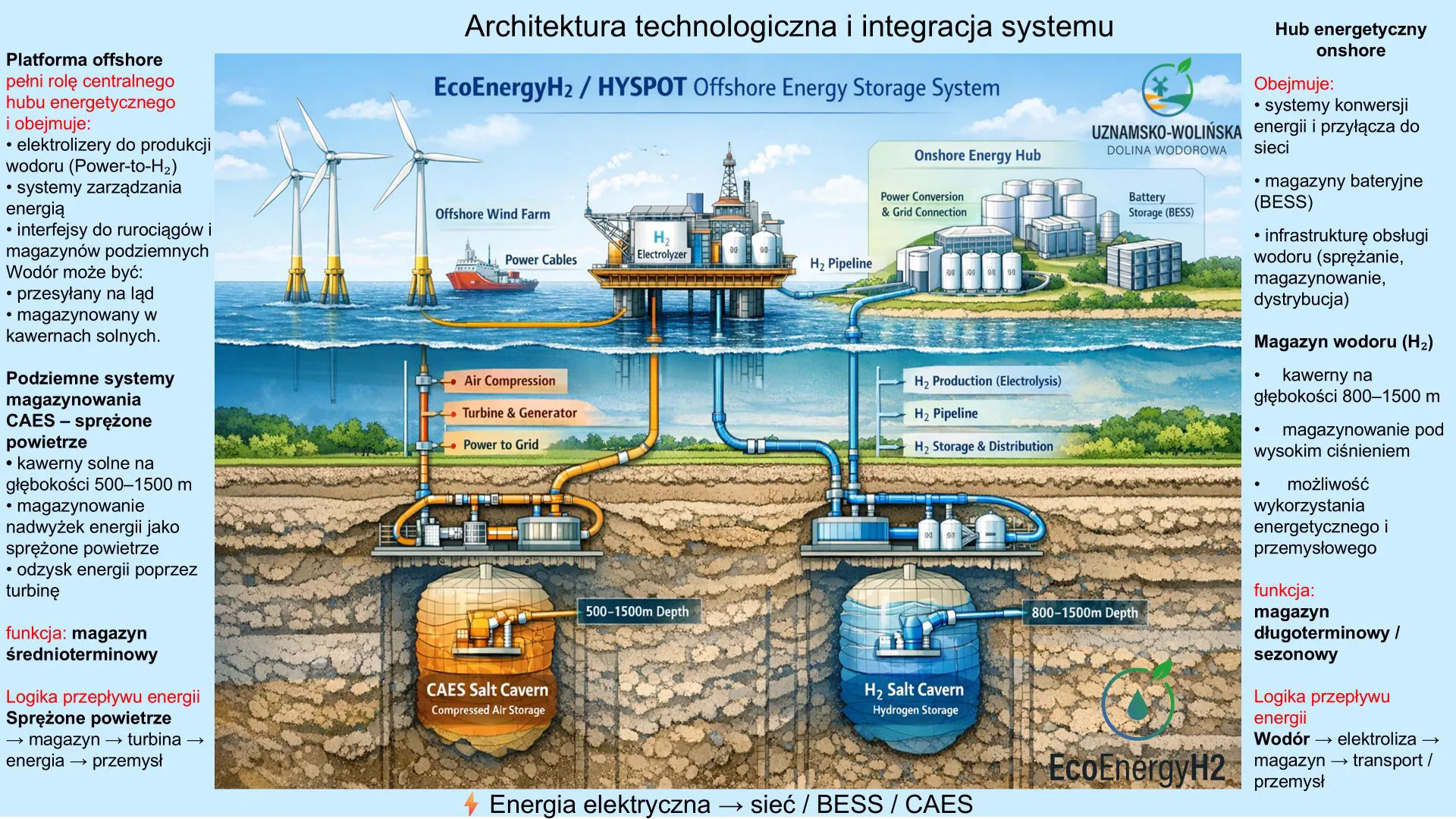
The purpose of EcoEnergyH2 Sp. z o.o.'s participation was to present and explain the Company's project from the perspective of the potential of using salt caverns as large-scale (underground) tankless storage of electricity in the form of compressed air, a technology that has the potential to play a decisive role in power systems with an increasing share of generation from renewable energy sources as economies transition to energy from renewable sources.
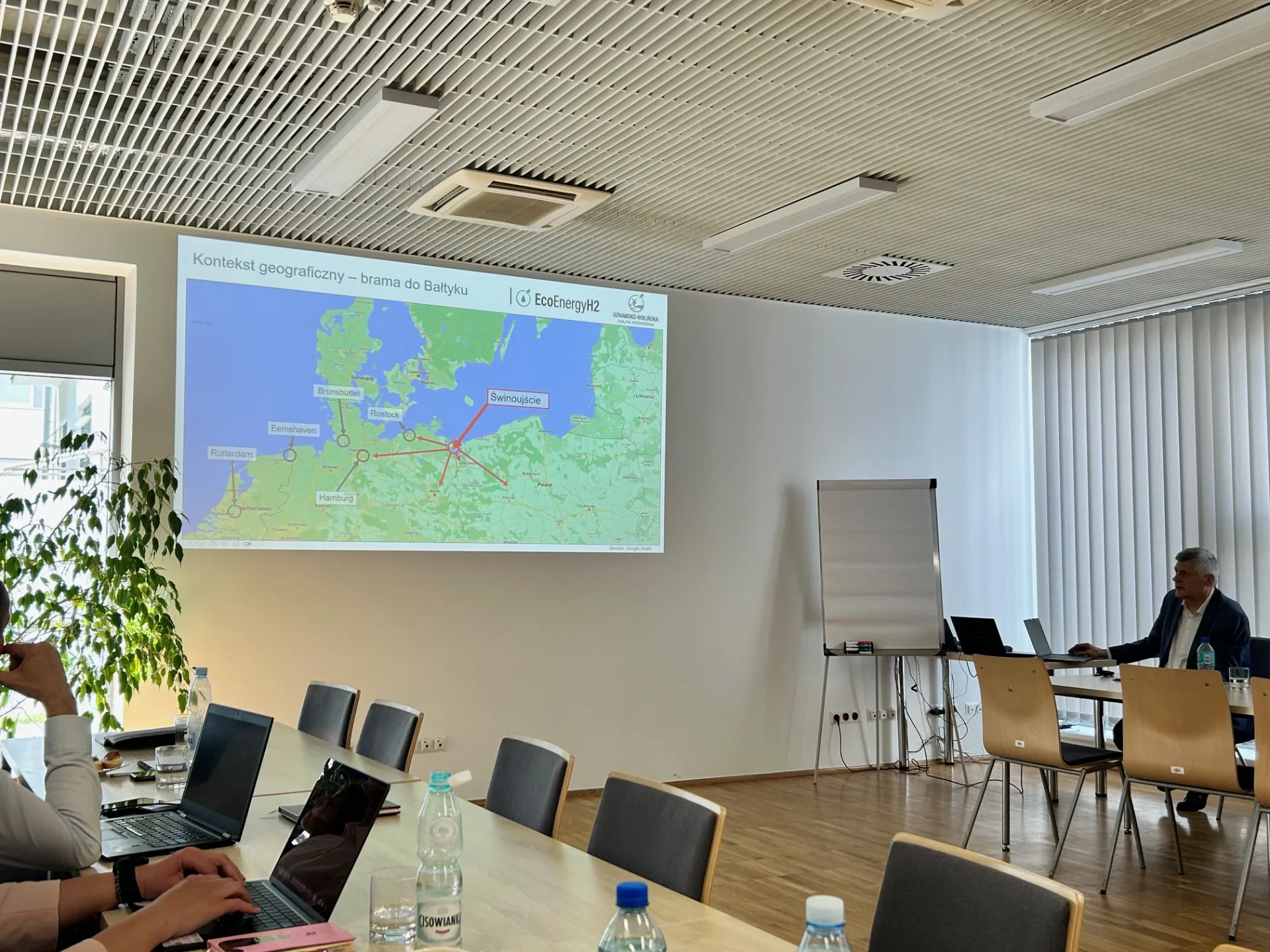
The long-term vision of the EcoEnergyH2 Project includes the potential for emission-free energy storage in produced hydrogen or compressed air, as well as a hybrid solution using both technologies, along with the development and implementation of a technological chain for electricity production, which provides the basis for becoming a key element of the modern energy supply chain, i.e. a technical mechanism for storing renewable energy for grid stability and load reduction.
CAES–Compressed Air Energy Storage is the storage of compressed air in salt caverns, for which KEY is safety and tightness, which requires specific geological requirements.
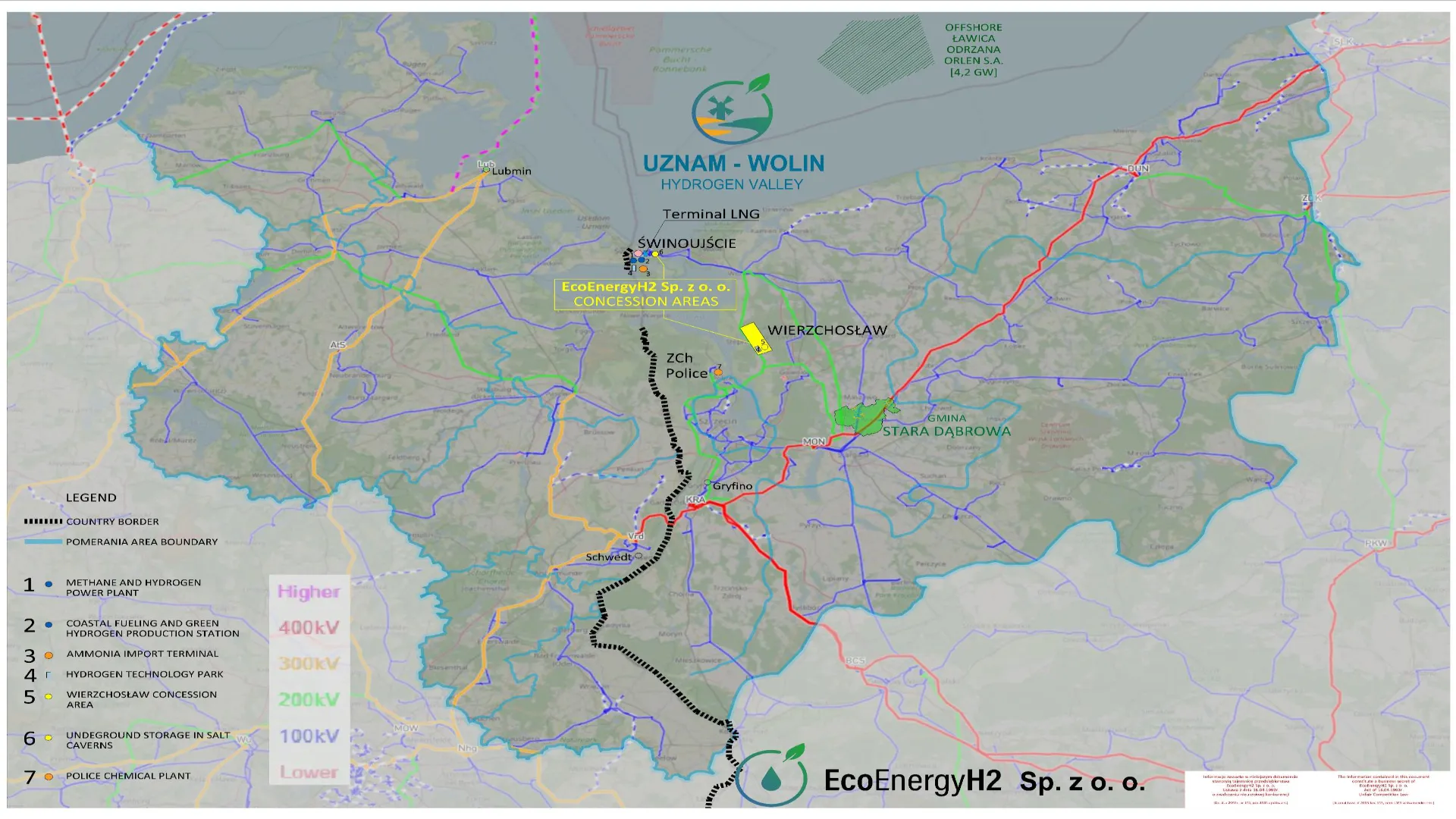
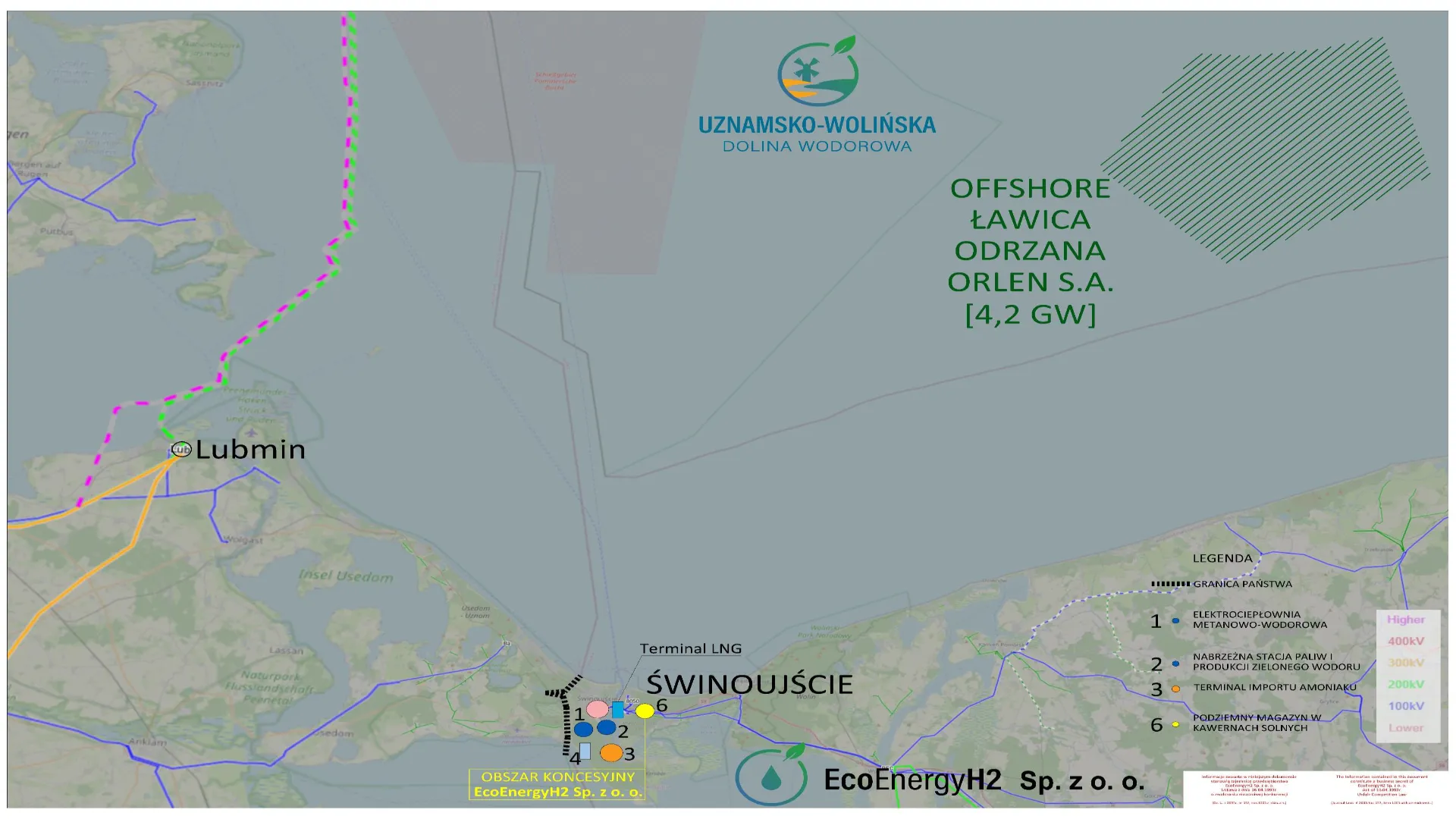
The EcoEnergyH2 project fully meets these requirements, as its location is the most optimal (figures below) not only in terms of geology, but also in terms of access to the existing energy transmission infrastructure.
The project meets the best technological requirements of large-scale warehouses, as it meets the requirements for:
I. Appropriate geological formation:
AND/ The best are salt structures (unique properties) → rock salt (halite - natural rock salt - sodium chloride, NaCl)
- high tightness (practically zero permeability) – prevents air escape;
- plasticity – salt „self-heals” microcracks;
- homogeneity – stable mechanical conditions.
B/ Uses (most common):
- salt diapirs – very beneficial because they allow the creation of large, deep caverns;
- salt deposits (layered) – also used, although they usually have greater geometric constraints.
C/ Less favorable (possible alternatives) due to being more difficult to seal and control:
- depleted gas deposits,
- aquifers.
II. Depths of caverns:
AND/ Depth dependence: → determines the operating pressure of the storage → lithostatic and geostatic pressure ensures the stability of the cavern:
- Too shallow: risk of leakage and air loss;
- Too deep (higher drilling and operating costs): excessive stresses → salt creep and cavern closure.
B/ Typical depth ranges for CAES in salts:
- most optimal range approx. ~500 – 1500 m;
- minimum: approx. 400–500 m (to obtain adequate pressure);
- maximum: up to approx. 1500–2000 m (geomechanical and cost constraints).
C/ Typical operating pressures: 40–100 bar (sometimes higher, depending on the design).
III. Additional geological requirements:
- appropriate thickness of the salt layer;
- no strong tectonic disturbances;
- low content of impurities (anhydrite, clays);
- stable hydrogeological conditions.
IV. Optimal requirements for a CAES warehouse:
- caverns in homogeneous rock salt (diaphragms or beds);
- depths of about 500–1500 m;
- adequate thickness of the salt layer (usually ≥ 100–200 m);
- geological stability.
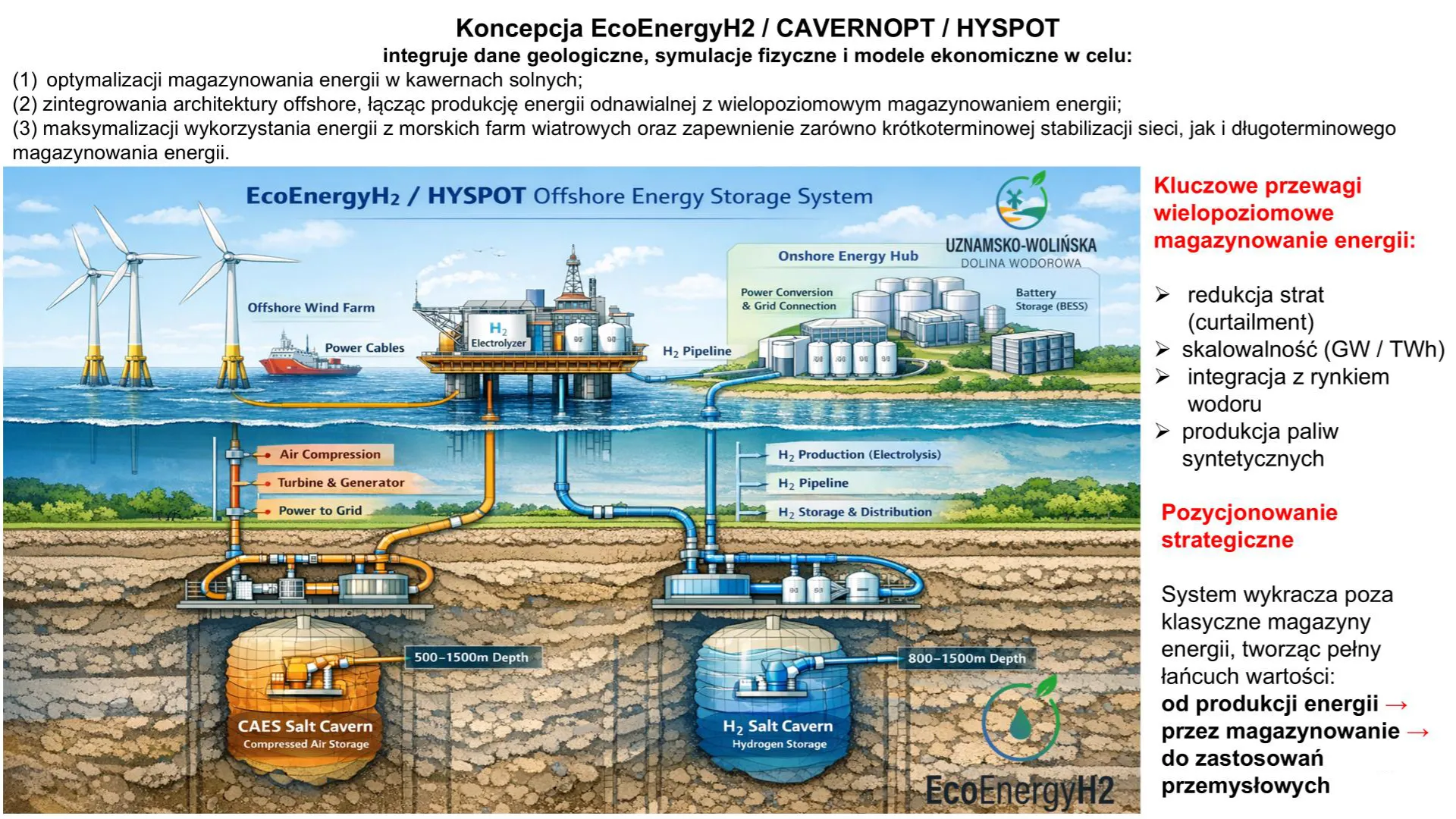
The location of the EcoEnergyH2 Project in the West Pomeranian Voivodeship, the most developed RES energy resource in Poland, combined with the proximity of an area with high RES power absorption, i.e. OWF Odra Bank (ORLRN SA) approx. 4.2 GW and onshore renewable energy Project Old Oak ok.
1,000 MW, meets the requirements for successful application of CAES technology, because integrates activities to achieve synergy effects ensuring:
- high storage capacity – will enable the storage of large amounts of energy for long periods of time;
- stabilization of the power grid – support for power balancing and integration of renewable energy sources;
- long service life – CAES systems can operate for decades without significant performance degradation;
- lower operating costs – compared to lithium-ion batteries, CAES offers cheaper large-scale energy storage.